Five Star PBW 1 lb Non-Caustic Alkaline Cleaner Review (2026)
Updated September 14, 2026 · Research-based review
Our verdict
Five Star's own 1 pound PBW is the standard alkaline cleaner most homebrew shops carry, built to strip fermentation residue from stainless steel, plastics and kegs without the harshness of caustic soda. A single 1 pound tub is an easy way to try it or keep on hand, though it runs out quickly for anyone cleaning several vessels a month.
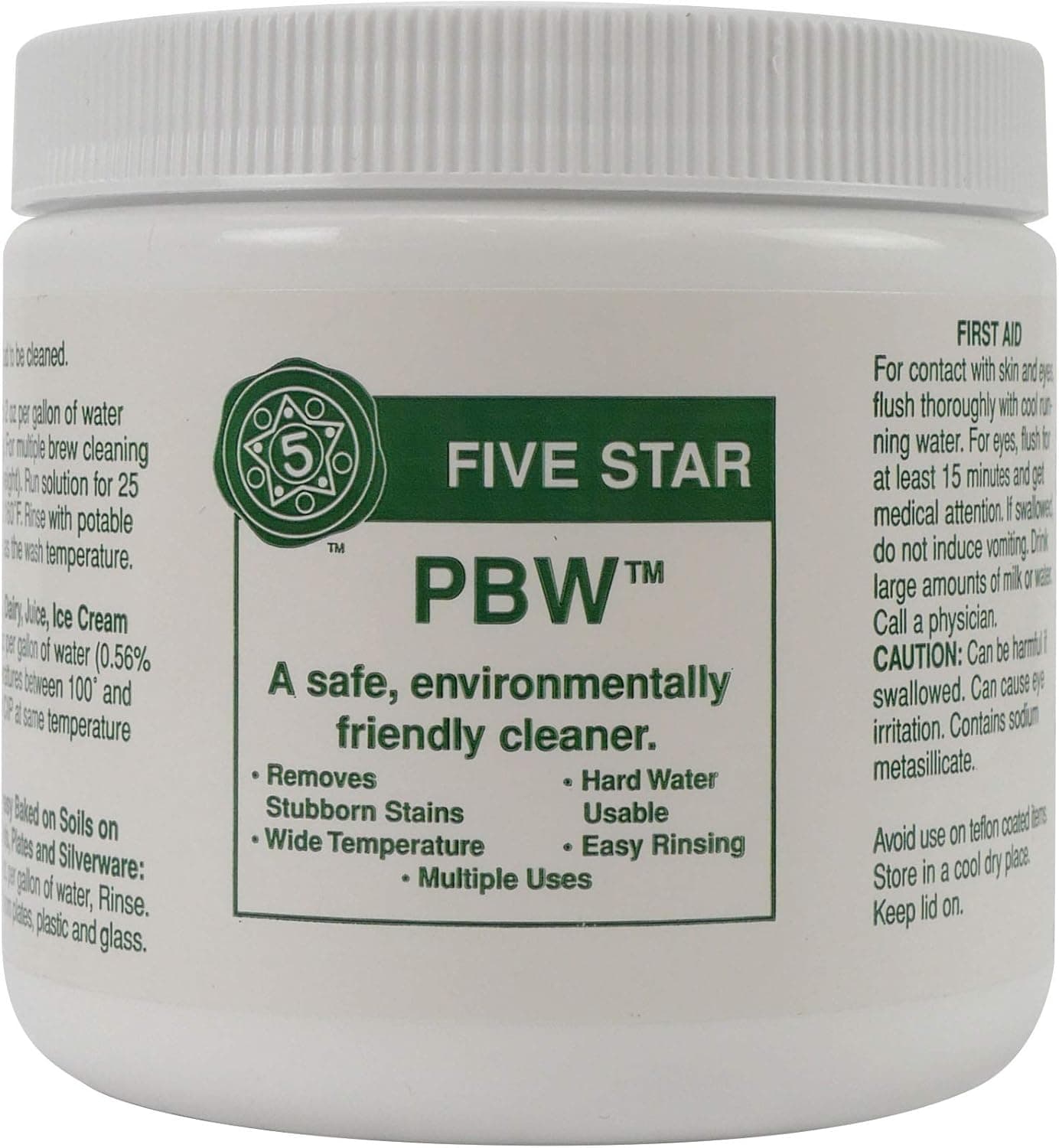
Five Star PBW 1 lb non-caustic alkaline cleaner, the trusted homebrew cleaner for all brewing surfaces.
Price range: $ (Budget)
What we liked
- + Non-caustic alkaline formula is safe for most brewing materials
- + Removes sticky fermentation residue with a simple soak
- + Five Star is the maker of the go-to homebrew cleaning products
Trade-offs
- - 1 lb container runs out fast if you clean kegs frequently
- - Must be rinsed away before using Star San or similar
Who this size suits
A single 1 pound container of Five Star PBW fits brewers who clean one or two vessels between batches, or anyone trying the product for the first time before committing to a larger tub. Since dosing runs from about three quarters of an ounce per gallon for cold-side equipment up to 2 ounces per gallon for hot-side kettles, a 1 pound container covers a meaningful number of cleaning sessions for a typical home brewer working with one or two fermenters and a kettle. Brewers who only clean occasionally, or who want to keep a small backup supply without a bulky tub taking up shelf space, are well served by this size rather than the 4 pound or larger bulk options.
What makes PBW different from other cleaners
PBW stands for powdered brewery wash, and Five Star is the company that originated the formula for commercial brewery use before it became a home brewing staple. It is a non-caustic alkaline cleaner, meaning it skips the harsh sodium hydroxide found in some industrial cleaners while still using active oxygen to break down the sticky protein and carbon soils that fermentation leaves behind. A 1 percent solution runs at a pH around 12, strong enough to lift residue without the skin and surface risks of a fully caustic product. It tolerates hard water well and produces little foam above roughly 100 degrees Fahrenheit, which keeps it manageable in a circulation cleaning setup.
Using it day to day
Mix roughly three quarters of an ounce per gallon for fermenters, kegs and bottles, or 1 to 2 ounces per gallon for kettles and other hot-side gear, then either soak or circulate the solution. A hot soak at around 140 degrees Fahrenheit for about four hours works well for stuck-on residue, and an overnight cold soak is an easy option when you are not in a hurry. PBW is safe on stainless steel, rubber, soft metals and most plastics, but avoid using it on aluminum. Always rinse equipment thoroughly afterward, since any residue left on brewing gear can carry through to the taste of your next batch and should not be left in contact with anything meant for drinking.
How it stacks up against other cleaners
Against the Home Brew Ohio 3 X PBW multi-pack, this single 1 pound tub is the more economical starting point if you are not ready to commit to three containers at once, though frequent cleaners will go through it faster and end up reordering sooner. Compared with the larger Five Star P.B.W. Cleanser 4 pound tub, this smaller size trades a lower per-ounce value for a lower upfront commitment and less shelf space used. Against alternative brewery washes like Active Element Brewery Detergent or National Chemical Craft Meister Oxygen Brewery Wash, PBW remains the more widely recommended option in home brewing circles, largely because of its long track record and predictable performance across stainless, plastic and glass.
Verdict and when to size up
This is a solid entry point into a cleaner that most experienced brewers already trust, and the smaller size keeps the cost of trying it low. Anyone who ends up using PBW regularly, cleaning kegs, carboys and kettles every month or more, should plan to move up to the Home Brew Ohio 3-pack or the 4 pound Five Star tub once they know how much they go through, since reordering a 1 pound container repeatedly costs more over time than buying in bulk. For a brewer just getting their cleaning routine established, though, this size is a sensible, low-risk way to start.
Frequently asked questions
What is PBW made for?
PBW, or powdered brewery wash, is a non-caustic alkaline cleaner made to strip fermentation residue and protein soils from brewing equipment without the harshness of a fully caustic cleaner.
Can I use PBW on aluminum brewing equipment?
No, PBW should not be used on aluminum. It is safe on stainless steel, rubber, soft metals and most plastics, but aluminum is an exception.
How long should I soak equipment in PBW?
A hot soak at around 140 degrees Fahrenheit for about four hours works well, or you can soak cold overnight for equipment with stubborn residue.
Will a 1 pound container be enough for regular brewing?
It covers a reasonable number of cleaning sessions for someone with one or two vessels, but brewers who clean several kegs or fermenters a month will likely go through it quickly and want a larger size.
Prices change often, so check the current price and availability on Amazon.
Check price on AmazonHome Brew Craft may earn a commission from the link above.