Five Star P.B.W. Cleanser 4 Pounds Powdered Brewery Wash Review (2026)
Updated September 14, 2026 · Research-based review
Our verdict
PBW is the cleaner most homebrewers reach for first when a kettle or keg has caked-on residue a brush cannot remove, and this 4 pound size lasts a while at typical doses. It is not a sanitizer and needs warm water and a thorough rinse, so pair it with a proper sanitizer before anything touches finished beer.
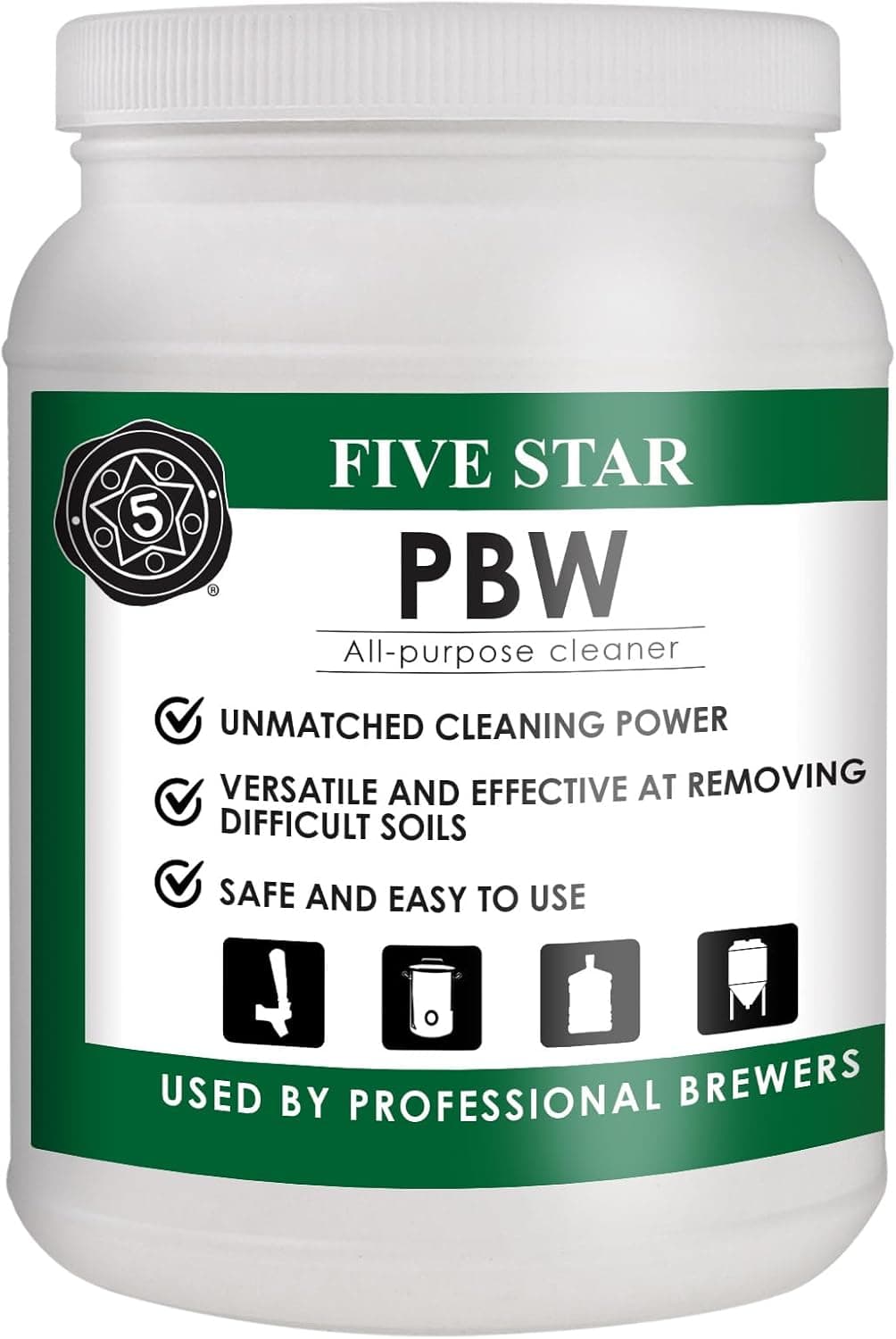
Five Star P.B.W. Cleanser 4 Pounds, the classic powdered brewery wash for removing krausen and beerstone.
Price range: $ (Budget)
What we liked
- + PBW is the homebrew standard for stubborn organic deposits
- + 4 Pounds is economical for brewers cleaning kegs and fermenters often
- + Non-caustic formula is gentler on skin than lye cleaners
Trade-offs
- - Works best in warm water, which means heating a lot of liquid
- - Needs thorough rinsing to avoid residue before sanitizing
Who this cleaner suits
PBW, short for Powdered Brewery Wash, is an alkaline cleaner from Five Star Chemicals originally developed for commercial brewery use and later adapted for homebrewers, and it is one of the most commonly recommended cleaners on homebrew forums for a reason. This 4 pound size suits a homebrewer who cleans kettles, fermenters, kegs, and other equipment regularly enough to want a cleaner that outlasts a single small container, without committing to the larger craft brewery sizes meant for commercial use. It is specifically aimed at removing organic buildup like wort residue, hop matter, and the beerstone that can accumulate in kegs and fermenters over repeated use, rather than being a general all-purpose kitchen cleaner.
Specs and design explained in plain English
Five Star describes PBW as a granular white powder and an alkaline, non-caustic cleaner, distinct from lye-based cleaners that can be harsh on skin and certain metals. The manufacturer's dosing guidance calls for dissolving 1 to 2 ounces per gallon for kettles and about 3/4 ounce per gallon for fermenters, kegs, and tanks, with heavier soil loads needing a stronger dose or longer contact time. For a basic soak, the guidance is to use warm water and let equipment sit, with options ranging from an overnight cold soak to a shorter 15 to 30 minute soak in warmer water, while a circulation or clean-in-place method calls for heating the solution to 130 to 180 degrees Fahrenheit and circulating for at least 30 minutes for tougher deposits.
Living with it day to day
PBW is formulated to be safe on stainless steel, rubber gaskets, plastic, tubing, and glass, but the manufacturer specifically warns against using it on aluminum, so check your equipment materials before soaking anything unfamiliar. Because it works best in warm water, a full kettle or large fermenter soak means heating a meaningful volume of liquid first, which takes more time and energy than a cold-water cleaner, though many brewers find an overnight cold soak works fine for lighter cleaning jobs. After soaking, thorough rinsing is important since PBW residue left on equipment can affect the taste of a finished beer and, according to the manufacturer, should not be left in contact with anything destined for consumption without being rinsed away first.
Honest trade-offs and how it compares
PBW is a cleaner, not a sanitizer, so it needs to be followed by a dedicated no-rinse sanitizer like Star San before fermenters, kegs, or bottling equipment touch finished beer, which means budgeting for both products rather than expecting one to do both jobs. Against smaller 1 pound packages of the same product, this 4 pound size is more economical per ounce for anyone cleaning kegs and fermenters often, while the small size may suit someone who brews only occasionally and wants to avoid a large container going unused. Against oxygen-based brewery washes from other brands, PBW has a long track record and wide community familiarity, which makes troubleshooting dosing or soak times easier to find discussed online.
Verdict and who should pick something else
Choose this size if you clean kegs, fermenters, and kettles often enough to go through cleaner at a steady pace and want to avoid reordering a small container repeatedly. It pairs well with a warm water soak routine and a separate sanitizer step. If you brew only a few times a year, the 1 pound size is more proportional to your actual usage and avoids powder sitting unused for a long stretch. Anyone with aluminum brewing equipment should look for a cleaner explicitly rated safe for aluminum instead, since Five Star does not recommend PBW for that material.
Frequently asked questions
Is PBW a sanitizer as well as a cleaner?
No, PBW is a cleaner only. It removes organic residue like wort and beerstone, but you still need a separate no-rinse sanitizer such as Star San before equipment touches finished beer.
Can I use PBW on aluminum equipment?
The manufacturer advises against using PBW on aluminum. Check your equipment's material before soaking anything you are not sure about.
How much PBW do I use per gallon of water?
Five Star recommends 1 to 2 ounces per gallon for kettles and about 3/4 ounce per gallon for fermenters, kegs, and tanks, adjusting upward for heavier soil.
Do I need warm water for PBW to work well?
It works best in warm water, with a circulation clean-in-place method calling for 130 to 180 degrees Fahrenheit. A cold overnight soak is also an option for lighter cleaning jobs.
Prices change often, so check the current price and availability on Amazon.
Check price on AmazonHome Brew Craft may earn a commission from the link above.