pH2Go Digital pH Meter by Anton Paar, Glass-Free ISFET Sensor, App Connected Review (2026)
Updated September 14, 2026 · Research-based review
Our verdict
The pH2Go by Anton Paar swaps a fragile glass probe for a rugged ISFET sensor, delivering accuracy from a 0.5 milliliter sample with app logging built in. It suits a brewer who checks mash pH constantly, but its cost puts it well above basic pH pens meant for occasional use.
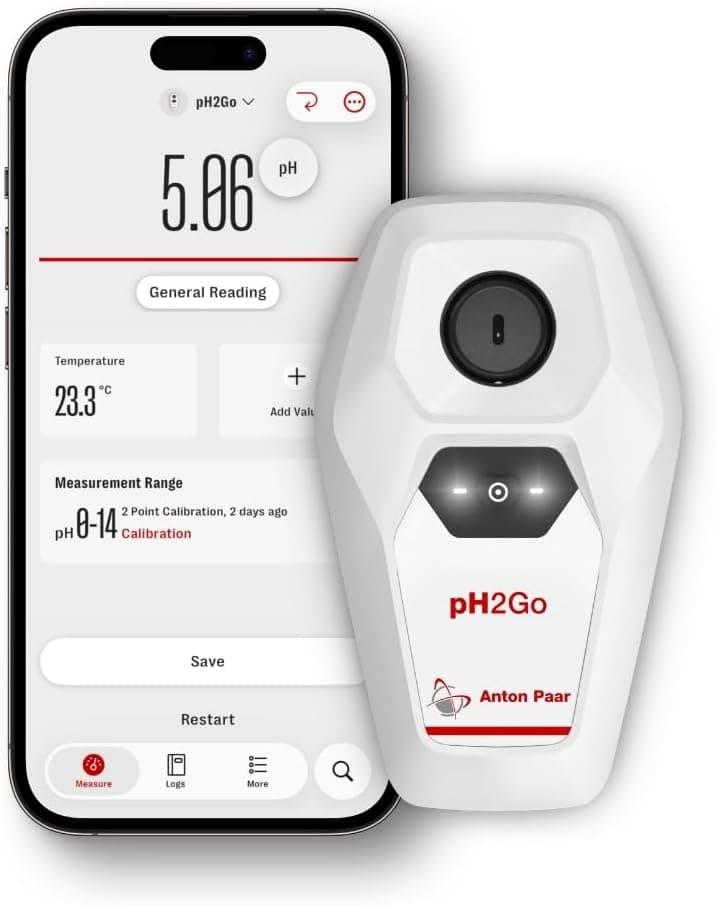
pH2Go digital pH meter by Anton Paar with a glass-free ISFET sensor and app connection for mash pH checks.
Price range: $ (Budget)
What we liked
- + Glass-free ISFET sensor is far more robust than fragile glass probes
- + Anton Paar is a respected lab instrument maker
- + App connection lets you log mash and wort pH readings
Trade-offs
- - Premium instrument costs much more than basic pH pens
- - Still needs calibration solutions and proper storage care
Who needs this level of pH meter
The pH2Go is built for brewers, winemakers and anyone else who checks pH often enough that a fragile glass probe becomes a liability. Because the sensor has no glass bulb, it survives being dropped in a mash tun or knocked against a kettle rim in a way that a traditional glass electrode pH pen cannot. All grain brewers who adjust mash chemistry batch after batch, or commercial-minded home brewers who want a lab instrument rather than a hobby gadget, are the clearest fit. Casual brewers who check pH once or twice a season will find the price hard to justify next to a simple pH test strip or an entry level digital pen, since this device is aimed at frequent, precision use rather than occasional spot checks.
Sensor technology and accuracy
Anton Paar replaced the usual glass bulb with a glass-free ISFET, or ion sensitive field effect transistor, sensor that avoids the fragility, storage requirements and slow rehydration glass electrodes are known for. The meter reads accuracy to within plus or minus 0.02 pH with a resolution of 0.01 pH across the full 0 to 14 range, and it needs only about 0.5 milliliters of sample to take a reading in roughly two seconds. It supports one, two, three or five point calibration with automatic temperature compensation, and it can work with DIN, NIST, JIS or custom buffer sets, which gives labs and serious hobbyists flexibility most consumer pH pens do not offer. A companion app walks users through each calibration step.
Build quality and everyday handling
The meter carries an IP67 waterproof rating, so splashes near a mash tun or a wine must will not damage it, and it is rated to work in ambient temperatures from 10 to 40 degrees Celsius while measuring samples as warm as 80 degrees Celsius. At 125 grams and roughly 108 by 64 by 35 millimeters, it is compact enough to keep in a brew bag rather than a lab drawer. Battery life covers about 10,000 measurements on two AAA batteries, which should last most home brewers a long time between changes. The Bluetooth Low Energy connection pairs with the iOS or Android app for step by step guided calibration, data visualization and storing readings across brew sessions, useful for tracking mash pH trends over many batches.
Value against simpler pH meters
Against pens like the Apera Instruments AI209-T or the VIVOSUN Digital pH Meter, the pH2Go costs considerably more, which is why the site's value score sits lower than its scores for fit and features. Cheaper meters like the Milwaukee pH58 and pH600 still use glass electrodes that need storage solution and periodic replacement, a maintenance cost the ISFET sensor largely removes. For a brewer weighing total cost of ownership over several years, the glass-free design and skipped calibration solution refills partly offset the higher upfront price, but anyone brewing only a few batches a year will get more value from a basic pen. The meter still needs calibration buffers and careful storage to hold its accuracy long term.
Verdict and who should pick something simpler
The pH2Go earns its high marks for fit, features and build because it solves the two biggest complaints brewers have with pH meters: fragile probes and constant maintenance. Anyone doing regular water and mash chemistry adjustments will appreciate the speed, small sample size and app logging. Brewers on a tight budget, or those who only check pH occasionally, should look at an affordable pen such as the VIVOSUN Digital pH Meter or the Milwaukee pH600 instead, since the premium here is mostly justified by frequency of use and durability rather than raw accuracy alone. For serious all grain brewers, though, this is one of the most capable meters available.
Frequently asked questions
What makes the ISFET sensor different from a glass pH probe?
An ISFET sensor has no fragile glass bulb and does not need to be stored in liquid between uses, which makes it more durable and lower maintenance than a traditional glass pH electrode.
How much sample does the pH2Go need for a reading?
It needs only about 0.5 milliliters of sample and returns a reading in roughly two seconds.
Is the pH2Go waterproof?
Yes, it carries an IP67 rating, so it can handle splashes and wet brewing environments without damage.
Does the pH2Go need an app to work?
The meter functions on its own, but the companion iOS and Android app adds guided calibration steps and lets you log and store pH readings over time.
Prices change often, so check the current price and availability on Amazon.
Check price on AmazonHome Brew Craft may earn a commission from the link above.