Lalvin EC-1118 Wine Yeast (10 Pack) - Champagne Yeast - 5 g Sachets Review (2026)
Updated September 14, 2026 · Research-based review
Our verdict
Lalvin EC-1118 is a workhorse champagne yeast that ferments cleanly across a wide temperature range and shrugs off high alcohol musts, making this 10 pack a practical staple for winemakers, cider makers, and mead makers who brew a handful of batches a year. Expect a bone dry finish, so plan residual sweetness through backsweetening.
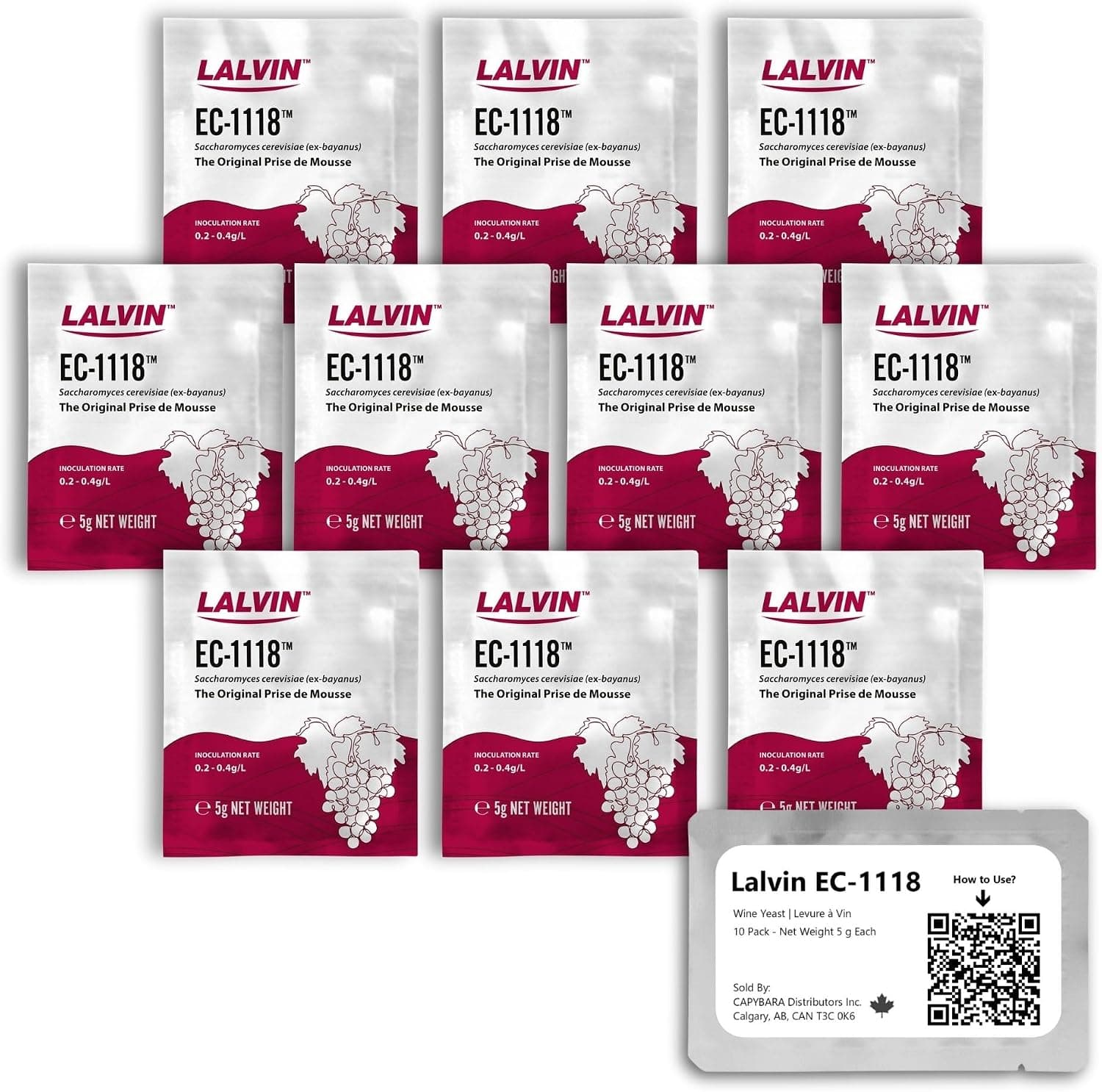
Lalvin EC-1118 champagne yeast in a 10 Pack of 5 g sachets for wine, cider and mead.
Price range: $ (Budget)
What we liked
- + EC-1118 ferments reliably even in high alcohol musts
- + 10 Pack of 5 g sachets covers many small batches
- + Neutral profile lets fruit and honey flavors show through
Trade-offs
- - Ferments very dry, so sweet meads need backsweetening
- - Strong strain can overpower other yeasts in mixed ferments
Who this yeast pack suits
EC-1118 is one of the most widely used wine yeast strains in the world, originally isolated from Champagne fermentations, and this listing packages ten individual 5 gram sachets rather than a single large pouch. That format suits home winemakers, cider makers, and mead makers who ferment several smaller batches over a season rather than one big batch, since each sachet is sealed on its own and only the one you open is exposed to air and moisture. It is a sensible default strain to keep on hand because of how reliably it finishes fermentations, which matters most to people who have had a stuck or sluggish ferment with a less vigorous strain before and want a safer bet for their next batch.
Specs and design explained in plain English
According to Lallemand, the manufacturer behind the Lalvin range, EC-1118 ferments well across a wide temperature range of roughly 50 to 86 degrees Fahrenheit, which gives some flexibility if your fermentation space is not tightly climate controlled. Alcohol tolerance is rated around 18 percent by volume depending on conditions, well above what most homebrew wine, cider, or mead recipes will reach, so it keeps fermenting instead of stalling in higher gravity musts. The strain is known for producing very little foam, low volatile acidity, and low hydrogen sulfide compared with many other options, and it flocculates well, meaning the yeast settles into a compact layer of lees that is easier to rack off of than a strain that stays cloudy in suspension.
Living with it during fermentation
Each 5 gram sachet is sized for a standard 5 to 6 gallon batch, so this 10 pack covers roughly ten batches of that size, or fewer if you pitch double sachets for a very large must. Sachets should be stored somewhere cool and dry until use, and most instructions call for either direct pitching or a short rehydration step in warm water before adding to the must, so read the specific pack instructions rather than guessing. Because EC-1118 is a relatively neutral, competitive strain, it tends to dominate mixed-culture ferments, which is useful when you want a clean predictable result but less useful if you are deliberately blending it with a more aromatic strain for a particular flavor profile.
Honest trade-offs and how it compares
The main trade-off with EC-1118 is that it ferments very dry, consuming nearly all the available sugar rather than leaving natural sweetness behind, so a sweeter mead or cider needs backsweetening with a stabilizer after fermentation finishes. Against the 20 pack version of the same yeast, this 10 pack is the better fit if you brew occasionally and want to avoid sachets sitting unused for a long time, while the 20 pack suits someone fermenting more often who wants a lower cost per sachet. Compared with other packaging like the 100 pack bulk option, this size strikes a middle ground between bulk savings and keeping the yeast reasonably fresh through normal home storage.
Verdict and who should pick something else
Choose this pack if you want a dependable, well documented strain in a size that matches occasional batch brewing, and you are comfortable backsweetening if you want anything other than a dry finish. It is a strong default for wine, cider, and mead makers who value consistency over a distinctive aroma contribution. If you specifically want a strain that leaves natural residual sweetness without intervention, look at a lower attenuating yeast instead, and if you brew often enough to go through ten sachets quickly, the 20 pack of the same strain will save you money without any downside.
Frequently asked questions
Will EC-1118 make a sweet or dry wine?
It ferments very dry by default because of its high attenuation and alcohol tolerance. If you want sweetness, you need to stabilize the batch and backsweeten after fermentation is complete.
How much yeast is in each sachet and how many batches does the pack cover?
Each sachet is 5 grams, sized for a standard 5 to 6 gallon batch, so the 10 pack covers around ten batches of that size under normal pitching rates.
What temperature range does this yeast tolerate?
Lallemand rates EC-1118 for fermentation across roughly 50 to 86 degrees Fahrenheit, which is a wider range than many other wine yeast strains.
Do I need to rehydrate the yeast before pitching?
Many home winemakers rehydrate in warm water for a short period before pitching, though direct pitching is also used. Follow the instructions on your specific sachet since methods vary slightly by supplier.
Prices change often, so check the current price and availability on Amazon.
Check price on AmazonHome Brew Craft may earn a commission from the link above.