Lalvin Wine Yeast EC-1118 10pk - Active Dry Yeast Review (2026)
Updated September 14, 2026 · Research-based review
Our verdict
This 10-pack of Lalvin EC-1118 gives home winemakers a season's supply of a reliable, high alcohol tolerance strain known for clean, fast fermentation. It handles wine, cider, mead and stuck restarts well, though its high attenuation leaves little residual sweetness for an off-dry finish.
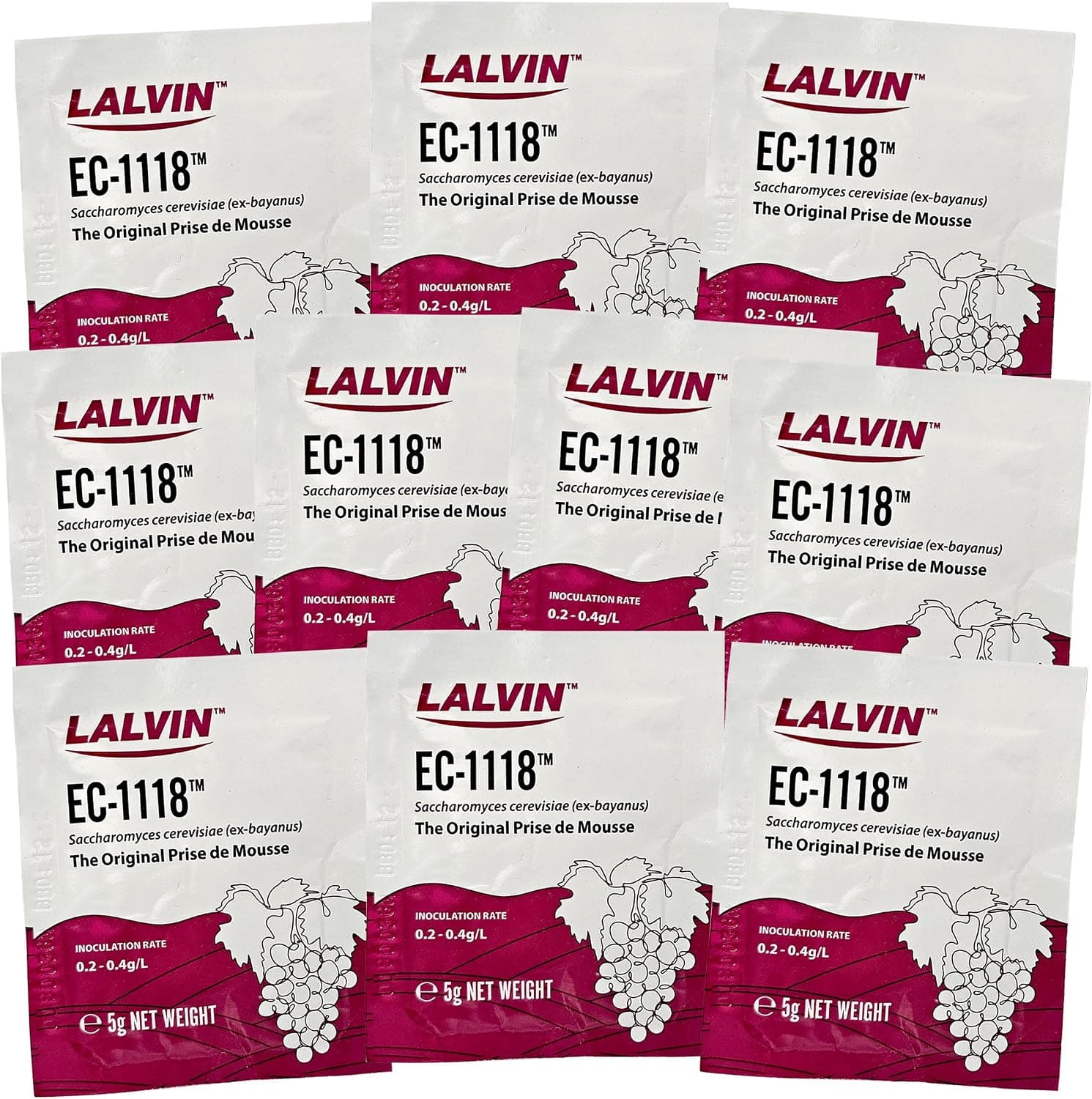
Lalvin EC-1118 wine yeast in a 10pk of active dry yeast packets for wines, ciders and meads.
Price range: $ (Budget)
What we liked
- + 10pk keeps enough sachets on hand for a season of fermenting
- + Fast, clean starting strain tolerates cool temperatures
- + Great for restarting stuck fermentations
Trade-offs
- - Check the sachet weight before ordering to plan your batch size
- - Very high attenuation leaves little residual sweetness
Who this yeast pack suits
This 10-pack of Lalvin EC-1118 suits home winemakers, cider makers and mead makers who brew often enough to want a stock of sachets on hand rather than buying a single packet before every batch. Because each 5 gram sachet treats up to 5 gallons of fruit must or 6 gallons of a concentrate kit juice, the 10-pack covers a full season of typical batch sizes for most home winemakers, including anyone running the Fontana or ABC Crafted Series 6 gallon wine kits. It also appeals to brewers who keep EC-1118 as their emergency yeast for restarting a stuck fermentation, since having spares on hand means not scrambling for a specialty yeast mid-batch.
What makes EC-1118 a go-to strain
EC-1118 is a neutral, all-purpose strain best known for its high alcohol tolerance of up to 18 percent, well above what many other wine yeasts can handle before stalling out. It ferments cleanly across a wide temperature range, roughly 50 to 86 degrees Fahrenheit, which makes it forgiving for home setups without precise temperature control. The strain was originally selected in a well-known sparkling wine region for its properties in producing sparkling base wines and for in-bottle secondary fermentation, but it has become a general workhorse for still wines, ciders and mead as well. Each package ships as a foil sachet containing 5 grams of dried yeast, non-GMO and gluten-free.
Using it for a batch
Rehydrate the yeast per the package instructions before pitching, typically in warm water for a short period, to give the dried cells the best start before they go into your must or juice. Because EC-1118 ferments fast and finishes with very high attenuation, expect a dry, crisp result rather than a wine with noticeable residual sweetness, which is exactly why brewers reach for it when they want a clean base for sparkling wines or a bone-dry table wine. Its tolerance for cool temperatures also makes it a practical choice for garages or basements that run cooler than an ideal fermentation chamber, since many other strains slow down or stall in the same conditions where EC-1118 keeps working.
Where it fits against other Lalvin packs
Compared with the Lalvin EC-1118 sold in a 20-pack, this 10-pack is the better fit for winemakers who do not want as much yeast sitting in storage at once, since dried yeast performance can decline over time even when stored properly. Against the 100-pack option, the 10-pack avoids overbuying for a home operation that is not running dozens of batches a year. The main trade-off against a single 5 gram packet is convenience versus commitment, since buying in a 10-pack only makes sense if you actually brew often enough to use the sachets before they age. EC-1118 itself remains a standard recommendation across nearly every winemaking guide for its reliability.
Verdict and when to pick another yeast
This is a smart buy for anyone making wine, cider or mead regularly and who values a yeast that rarely lets them down, whether that means a clean primary fermentation or rescuing a batch that stalled with another strain. The high attenuation and neutral character are strengths for dry wines and sparkling bases but a drawback for winemakers chasing a sweeter, fruitier finish, who should look at a lower alcohol tolerance strain instead if residual sweetness matters. Occasional winemakers who only brew once or twice a year are better off buying a single sachet rather than committing to a 10-pack that may sit unused.
Frequently asked questions
How much must does one packet of EC-1118 treat?
Each 5 gram sachet is suitable for up to 5 gallons of fruit must or up to 6 gallons of a concentrate kit juice, such as the Fontana or ABC wine kits.
What is EC-1118 best used for?
It is a neutral, all-purpose strain commonly used for still wines, sparkling wine bases, ciders, mead, and for restarting stuck fermentations thanks to its high alcohol tolerance.
Will EC-1118 leave my wine sweet?
No, it has very high attenuation and ferments dry, so expect little to no residual sweetness unless you back-sweeten after fermentation is complete.
What temperature range does this yeast work in?
EC-1118 ferments across roughly 50 to 86 degrees Fahrenheit, making it more tolerant of cool fermentation spaces than many other wine yeast strains.
Prices change often, so check the current price and availability on Amazon.
Check price on AmazonHome Brew Craft may earn a commission from the link above.