Anvil Foundry 10.5 Gallon All-In-One Brewing System With Pump Review (2026)
Updated September 14, 2026 · Research-based review
Our verdict
The pump-equipped version of Anvil's 10.5 Gallon Foundry automates recirculation so the mash bed stays even without hand stirring, using the same stainless build and grain basket as the base model. It costs more and adds tubing to clean, but for brewers wanting hands-off mashing it is worth the difference.
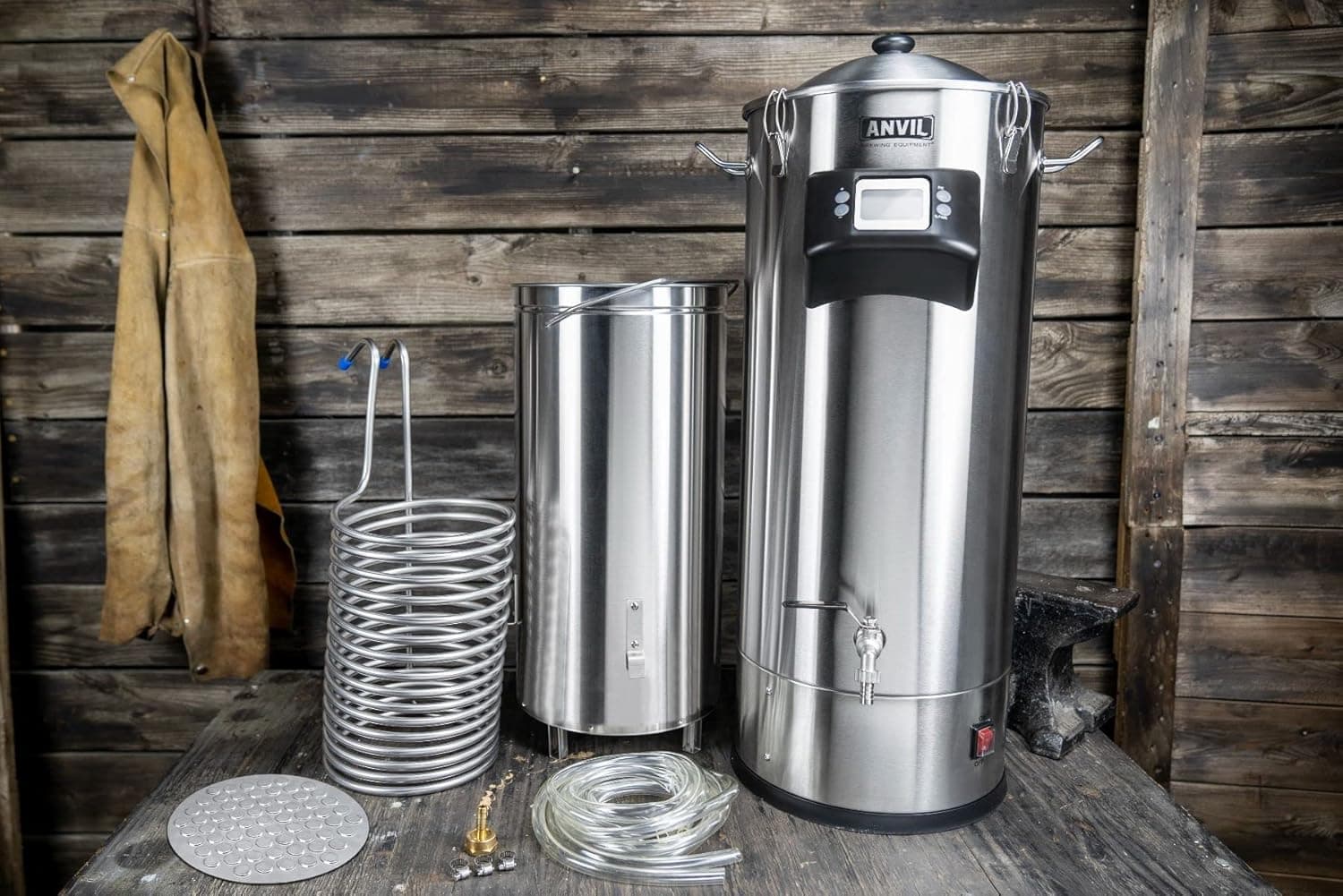
The Anvil Foundry 10.5 Gallon all-in-one system with pump included for recirculating mashes and easy transfers.
Price range: $ (Budget)
What we liked
- + Included pump recirculates the mash for better efficiency and moves wort to the fermenter
- + 10.5 Gallon kettle covers five gallon batches plus smaller high-gravity brews
- + Solid Anvil build quality with a simple, well-documented controller
Trade-offs
- - Pump adds tubing and fittings that must be cleaned carefully after each session
- - Costs more than basic single-vessel units that skip the pump
Who this pump-equipped system suits
This is the same Anvil 10.5 Gallon Foundry electric all-in-one system, built by Blichmann Engineering, but sold with the recirculation pump included rather than as a separate accessory. Recirculating the wort over the grain bed during the mash is meant to improve extraction consistency and keeps the mash temperature more even from top to bottom, which matters most to brewers chasing repeatable numbers batch after batch. It suits someone who has already brewed a few batches with a simpler system and wants to step up to a more automated, closer to hands-off process without moving to a full three-vessel setup. Because the pump ships with the unit, there is no need to hunt down a compatible aftermarket kit or worry about fitment, which is the main reason to pick this listing over the pump-free Foundry.
Specs and design explained in plain English
The vessel itself carries the same core specifications as the standard 10.5 Gallon Foundry: a stainless steel kettle around 12.5 inches in diameter, dual-voltage heating that switches between 120V at 1600 watts and 240V at 2800 watts, double-wall insulation, and a 16 pound capacity grain basket rated for roughly 75 to 78 percent efficiency. The recirculation pump adds silicone tubing, hose clamps, a flow clamp, and a stainless return tube that directs wort back over the top of the grain bed, along with a perforated disc that helps distribute flow evenly. A touchscreen controller manages heating and can run a 24 hour delay so water is ready to heat before you wake up, and a stainless immersion chiller is included for cooling the finished wort after the boil.
Living with it on brew day
With the pump running, you mostly monitor the mash rather than stir it, since the recirculated wort keeps temperature and extraction more uniform across the grain bed on its own. That convenience comes with more parts to break down and rinse after each session: the tubing, the return tube, and the pump housing all need a soak in cleaner and a thorough rinse to avoid harboring residue between batches, more so than the simpler pump-free version. Clog resistance is designed into the pump, but a very fine crush or a lot of flour-like grain dust can still slow flow, so a reasonably coarse crush and a good stir at doughing-in help keep recirculation smooth. The same delay-start and touchscreen controls carry over from the base Foundry, so the actual daily operation feels familiar if you have used other Anvil equipment.
Trade-offs against the base Foundry and other all-in-ones
The direct comparison is Anvil's own 10.5 Gallon Foundry without a pump, which costs less and has fewer parts to clean but leaves you stirring by hand and transferring by gravity alone. Against the Grainfather Connect, this Foundry offers a similar recirculating design but without the companion app and guided recipe steps, so it is more of a manual instrument than a connected one. Compared with budget all-in-ones like the VEVOR or FOHERE systems that also include pumps, the Anvil build quality, insulation, and the 240V upgrade path are the main reasons this unit sits higher in price, and those extras matter more if you plan to brew often rather than occasionally.
Verdict and who should look elsewhere
Pick this pump-equipped Foundry if you want Anvil's build quality with recirculation handled for you and you are willing to spend the extra time cleaning tubing after each brew day. It is a strong choice for brewers moving up from a basic kettle-and-cooler setup who want more consistent extraction without jumping to a three-vessel system. If budget matters more than automated recirculation, the non-pump Foundry does the same core job for less and with a simpler cleanup routine. Brewers who want app-guided recipes and step automation built in from the start should compare this against the Grainfather Connect before deciding.
Frequently asked questions
What does the included pump actually do?
It recirculates wort from the bottom of the kettle back over the top of the grain bed during the mash, which helps even out extraction and temperature without you having to stir by hand.
Is cleanup harder than the non-pump Foundry?
Yes, somewhat. The tubing, return tube, and pump housing need to be rinsed and occasionally soaked in cleaner in addition to washing the kettle and grain basket, which takes extra time after each session.
Can I still run it on a standard household outlet?
Yes, the heater is switchable between 120V at 1600 watts on a regular outlet and 240V at 2800 watts on a dedicated circuit, the same as the non-pump Foundry.
Does it come with anything for cooling the wort?
A stainless immersion chiller with hoses and fittings is included, so you can cool a finished batch without buying a separate chiller.
Prices change often, so check the current price and availability on Amazon.
Check price on AmazonHome Brew Craft may earn a commission from the link above.