YCH Hops - Citra HBC 394 Hop Pellets 1 lb Review (2026)
Updated September 14, 2026 · Research-based review
Our verdict
YCH Hops Citra HBC 394 pellets suit IPA, pale ale and hazy brewers who want a verified source of the real tropical citrus hop rather than a generic substitute. The main strength is authenticity from a major Yakima Valley grower, the trade off is a premium price and a bag that fades fast once opened.
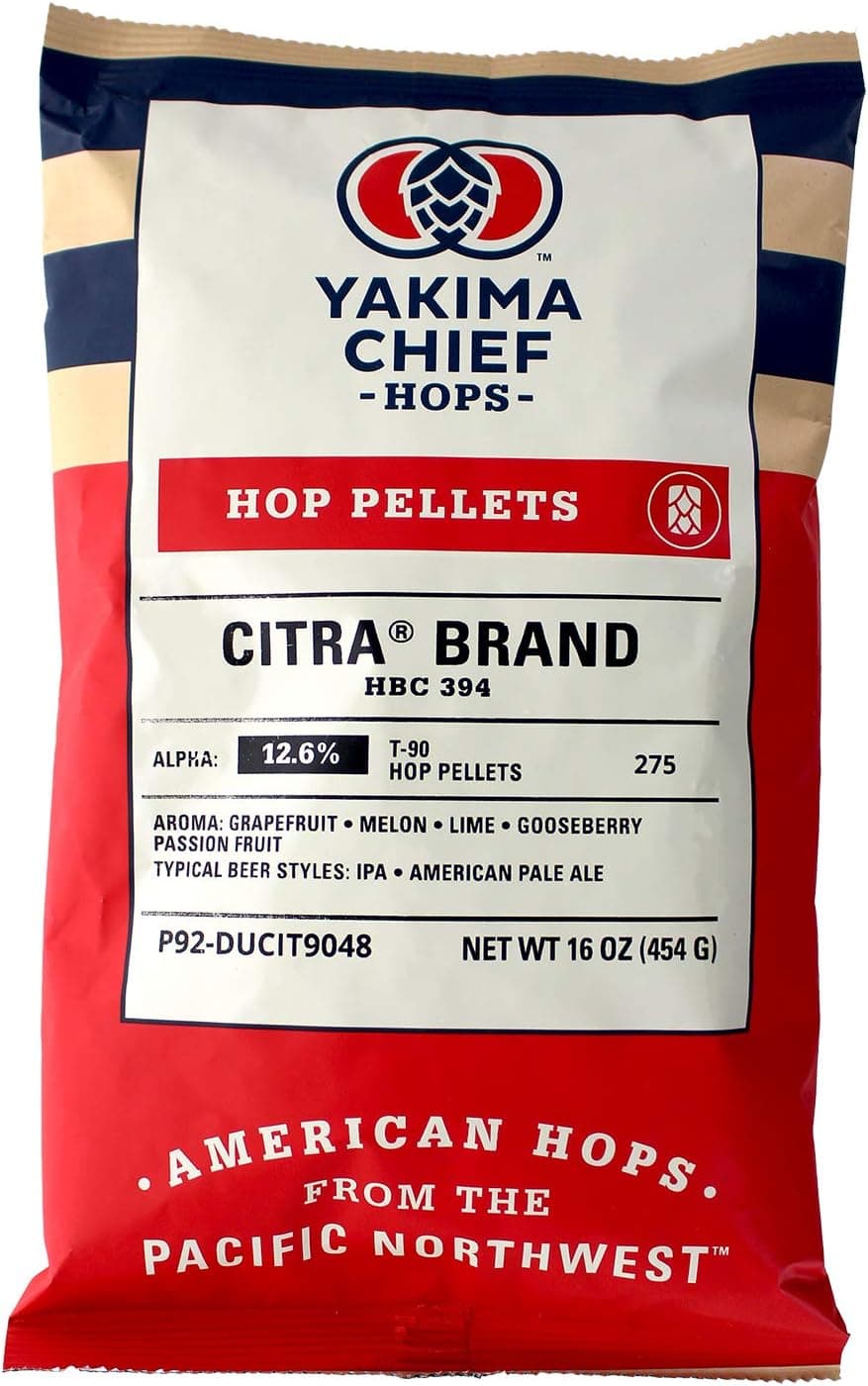
YCH Hops Citra HBC 394 pellets in a 1 lb bag, sourced from a major Yakima Valley grower.
Price range: $ (Budget)
What we liked
- + YCH Hops is a major grower, so quality and labeling are trustworthy
- + Official HBC 394 designation confirms genuine Citra variety
- + 1 lb bag is ideal for brewers making hazy and West Coast IPAs often
Trade-offs
- - Premium variety commands a higher price than common aroma hops
- - Bulk bag loses aroma quickly if not stored airtight and frozen
Who should reach for this bag
Citra HBC 394 is one of the defining hops of modern American craft brewing, and this 1 lb bag from YCH Hops targets brewers who make West Coast IPA, New England style hazy IPA, pale ale, and fruited sours on a regular basis. Because YCH Hops is one of the larger growers and processors in the Yakima Valley, the labeling and lot tracking on this bag are more reliable than on unbranded hop listings, which matters when a recipe depends on a specific variety showing up as advertised. A full pound also suits a homebrewer who brews several batches from one bag rather than someone who only needs a token addition for a single five gallon batch, since leftover hops need real freezer discipline to stay useful.
What HBC 394 actually is
Citra is the trademarked name for hop breeding selection HBC 394, developed by the Hop Breeding Company from parent stock that includes Hallertau Mittelfruh, US Tettnang, Brewers Gold and East Kent Golding, then released commercially in 2007. Typical alpha acid content runs in the 11 to 13 percent range with beta acids around 3.5 to 4.5 percent, so it has enough bittering power for a boil addition but is prized mainly for its aroma oils, which read as grapefruit, lime, melon, mango and lychee. These pellets are the standard T-90 pelletized form, meaning whole cone hops are ground and compressed into pellets that pack more densely and store a bit better than loose cones, though they still need cold, airtight storage to hold their character.
Getting the most out of the pound
Because Citra's alpha acids are moderate rather than extreme, most homebrewers use this hop late in the boil, as a whirlpool or flameout addition, or as a dry hop rather than as the sole bittering charge, since a long boil drives off the volatile oils that make the variety worth buying in the first place. Once the bag is opened, oxygen and warmth are the enemy of hop aroma, so the practical move is to portion out what a single batch needs, press the air out of the remaining hops, reseal in a vacuum bag or heavy freezer bag, and keep the rest in the coldest part of a freezer rather than a refrigerator door. Treated this way a pound can supply several batches over a brewing season without a noticeable drop in aroma intensity.
How it stacks up against other listings
Compared with single variety pellets from smaller suppliers such as Home Brew Ohio's Centennial or Brewcraft's Cascade, this YCH Hops bag costs more per pound, which is the fair trade off for buying from a grower with traceable sourcing rather than a repackaged import of uncertain freshness. Smaller 1 or 3 ounce Citra listings are cheaper up front and suit a brewer testing the variety for the first time, but they cost more per ounce than this full pound and run out fast once a brewer settles on Citra as a house hop for hazy IPA. For anyone already committed to brewing IPA and pale ale regularly, the pound size pays for itself in fewer reorders and more consistent lot to lot character.
Bottom line for hazy and IPA brewers
This bag earns its place with brewers who lean on Citra as a workhorse aroma hop and want a grower backed source rather than a mystery import, and our score of 8.6 out of 10 reflects that fit for the job. The trade offs are a higher cost than generic hop listings and the storage discipline needed to protect a full pound once it is opened. A brewer who only wants to try Citra once, or who brews infrequently, should start with a smaller ounce sized pack instead, since a pound left half used in a warm cupboard will lose its punch long before the next batch.
Frequently asked questions
What does HBC 394 mean on the label
HBC 394 is the breeding code the Hop Breeding Company used for this selection before it was trademarked as Citra, so bags labeled either way refer to the same variety.
How should I store leftover hop pellets
Press out excess air, reseal the bag or transfer to a vacuum sealed bag, and store in a freezer rather than a fridge, since cold and low oxygen are what keep hop aroma oils from breaking down.
Can Citra be used for bittering as well as aroma
Yes, its 11 to 13 percent alpha acid range works for a bittering addition, but most brewers save it for late boil, whirlpool or dry hop use where its citrus and tropical fruit aroma comes through.
Is a full pound too much for one batch
For a typical five gallon batch a pound is usually more than one recipe needs, so plan to portion and freeze the remainder for future brews rather than using it all at once.
Prices change often, so check the current price and availability on Amazon.
Check price on AmazonHome Brew Craft may earn a commission from the link above.