Campden Tablets (potassium metabisulfite) 550 mg - 100 Tablets Review (2026)
Updated September 14, 2026 · Research-based review
Our verdict
A straightforward pack of 100 potassium metabisulfite Campden tablets at 550 mg each, used by home winemakers and cider makers to sanitize must and stabilize finished batches. The dosing math is simple and the potassium form suits wine work well, but the tablets need crushing and careful measuring to avoid a sulfur off-note.
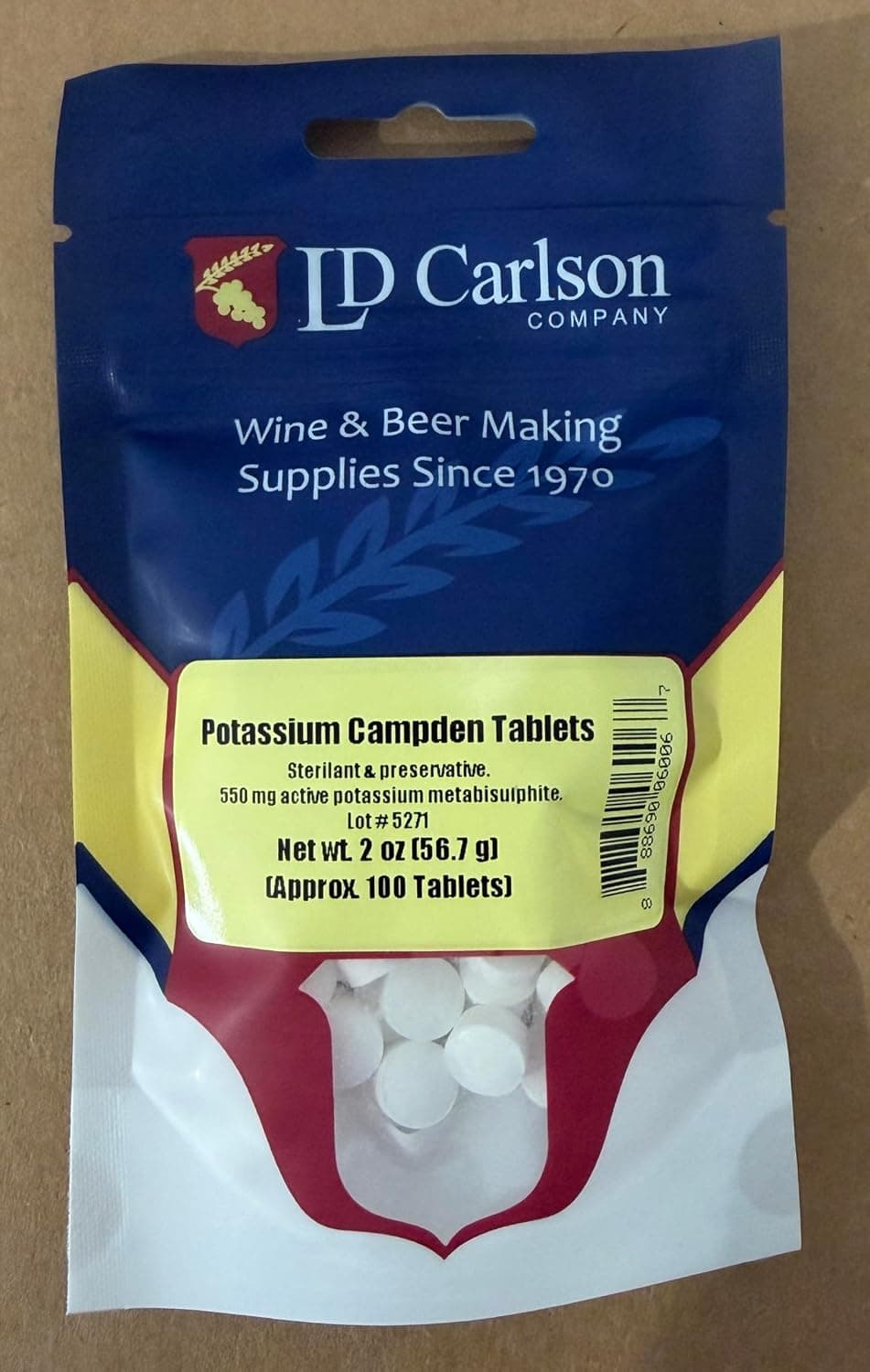
Campden tablets of potassium metabisulfite at 550 mg each, a pack of 100 Tablets for measured dosing.
Price range: $ (Budget)
What we liked
- + 550 mg per tablet makes dosing calculations straightforward
- + 100 Tablets covers a lot of wine and cider batches
- + Potassium form is well suited to wine stabilizing
Trade-offs
- - Tablets still need crushing for even dissolving
- - Overdosing can leave a sulfur smell in the wine
Who these tablets fit
Campden tablets are a sulfite-based additive used in home winemaking, cider making and some beer sanitizing steps to kill unwanted bacteria and wild yeast before pitching a chosen yeast strain, and to remove chlorine and chloramine from tap water used in brewing. This particular product is the potassium metabisulfite form rather than sodium metabisulfite, which is generally the preferred choice for wine and cider makers since it avoids adding extra sodium to the must. It fits hobbyists who already make wine, cider or mead in gallon or five gallon batches and need a reliable, pre-measured way to dose sulfite rather than working from bulk powder and a scale.
Dosing and materials in plain English
Each tablet contains 550 milligrams of active potassium metabisulfite, and the common home winemaking guideline is one tablet per gallon of must, which yields roughly 75 parts per million of total sulfur dioxide, a level generally used to kill wild yeast and most spoilage bacteria before pitching a cultured yeast. For finer dosing, two crushed tablets are roughly equivalent to a quarter teaspoon of sulfite powder, which gives some flexibility for recipes that call for powder measurements instead of tablet counts. The 100 tablet count in this pack covers a substantial number of batches for a hobbyist working at the one to five gallon scale, since most single batches only need one to a handful of tablets depending on volume and stage.
Using the tablets in practice
In practice, Campden tablets are crushed into a powder, typically with the back of a spoon or a mortar and pestle, before adding them to must or water, since the tablets do not dissolve quickly or evenly if dropped in whole. A common process is to add the crushed tablets at the primary fermentation stage and wait about 24 hours before pitching yeast, which gives the sulfite time to knock back wild microbes without killing off the cultured yeast added afterward. The tablets are also commonly used to treat tap water before brewing, neutralizing chlorine and chloramine that can otherwise produce off-flavors in the finished beer or wine. Because dosing is measured per gallon, batches of different sizes need proportionally scaled tablet counts.
Trade-offs and how it compares
Against the LD Carlson 1 Pound bulk pack, this 100 tablet pack is far more convenient for dosing by count rather than weighing powder, but it holds less total sulfite overall, so very high volume winemakers may find the bulk pound pack more economical per batch. Compared with sodium metabisulfite versions sold under similar Campden tablet branding, this potassium form is generally favored for wine and cider because it does not introduce the sodium that the sodium salt form does, which matters more to winemakers being particular about mineral content in their must. The main trade-off with any Campden tablet product is that the tablets still need crushing before use, and overdosing beyond the standard one-tablet-per-gallon guideline can leave a noticeable sulfur smell in the finished wine.
Verdict and who should pick something else
This pack suits home winemakers and cider makers who want pre-measured, easy to count sulfite dosing without weighing powder on a scale, and who are comfortable following the standard one tablet per gallon guideline. It is a practical, no-frills product for anyone stabilizing must or dechlorinating brewing water at a hobbyist scale. Very high volume producers making many gallons per batch may find a bulk pound of loose potassium metabisulfite powder more cost effective, since it avoids the tablet-crushing step and scales more easily by weight. Anyone unfamiliar with sulfite dosing should always follow the manufacturer's guidance and standard winemaking references rather than guessing at quantities, since overdosing sulfite affects both flavor and yeast health.
Frequently asked questions
How many Campden tablets do I need per gallon of wine?
The standard guideline is one tablet per gallon of must, which yields roughly 75 parts per million of total sulfur dioxide, though always confirm against your specific recipe.
Do Campden tablets need to be crushed before use?
Yes, the tablets should be crushed into a powder before adding them to must or water, since whole tablets dissolve slowly and unevenly.
Is potassium metabisulfite better than sodium metabisulfite for wine?
Potassium metabisulfite is generally the preferred form for wine and cider making because it does not add extra sodium to the must the way the sodium salt form does.
Can Campden tablets be used to treat brewing water?
Yes, Campden tablets are commonly used to neutralize chlorine and chloramine in tap water before brewing, which helps avoid chemical off-flavors in the finished beer or wine.
Prices change often, so check the current price and availability on Amazon.
Check price on AmazonHome Brew Craft may earn a commission from the link above.